Skip to content
Home
SUMPs
SUMPs in Practice
Country profiles
Training
SUMP basic principles
Monitoring and evaluation
Data for active modes
Small scale experiments
Stakeholders engagement
Events
Tools & Resources
BSR SUMP Knowledge Hub
About us
Home
SUMPs
SUMPs in Practice
Country profiles
Training
SUMP basic principles
Monitoring and evaluation
Data for active modes
Small scale experiments
Stakeholders engagement
Events
Tools & Resources
BSR SUMP Knowledge Hub
About us
Filters
Filters
Country or geographical area
Baltic Sea Region
(28)
Denmark
(0)
Estonia
(0)
EU
(19)
Finland
(3)
Germany
(3)
Latvia
(4)
Lithuania
(3)
Norway
(0)
Poland
(3)
Sweden
(4)
Document contents
checklists
(3)
data
(18)
general information
(17)
good practices
(28)
indicators
(12)
recommendations
(26)
step-by-step instructions
(7)
Document language
Danish
(0)
English
(61)
Estonian
(0)
Finnish
(0)
German
(0)
Latvian
(0)
Lithuanian
(0)
Norwegian
(0)
Polish
(0)
Swedish
(0)
Document topic
accessibility
(13)
climate
(11)
cycling
(21)
electromobility and zero-emission transport
(2)
private cars and parking policy
(16)
public transport
(13)
road safety
(14)
shared mobility
(3)
urban logistics
(3)
walking
(20)
Scale of application
Baltic Sea Region
(6)
city
(21)
country
(0)
EU
(1)
functional or metropolitan area
(5)
region
(1)
Stage in the SUMP process
action plan
(10)
diagnosis
(17)
financing
(2)
implementation
(16)
monitoring and evaluation
(29)
participation
(17)
vision and objectives
(10)
Target audience
civil society organisations
(3)
planners
(36)
political decision-makers and public officials
(28)
researchers
(2)
residents
(8)
transport operators
(3)
Type of material
case study
(14)
framework
(5)
guidelines
(12)
handbook
(13)
presentation
(13)
report
(5)
SUMP plan
(4)
tool / template
(12)
training material
(8)
Clear filters
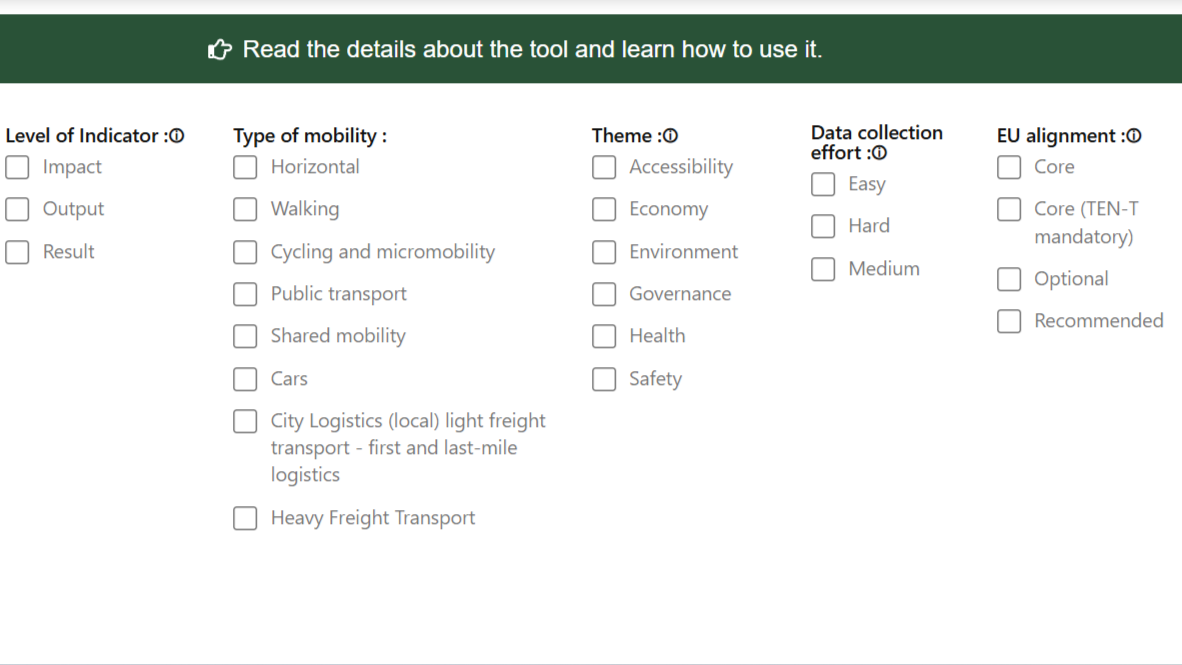
Monitoring & Evaluation Indicator Selector Tool
A practical tool designed to support municipalities in selecting key performance indicators (KPIs).
Monitoring and Evaluation Framework Appendices
A practical resource providing guidance on data sources, ready-to-use questionnaires, and practical examples of indicators and M&E plan components from Turku and Cēsis
Guidelines & recommendations for other cities/urban areas on the SCALE-UP strategies for vertical & horizontal upscaling 1 and 2
This is a practical guidance document that translates the project’s urban mobility strategies into transferable recommendations, supporting cities in scaling up solutions both vertically and horizontally.
SCALE-UP: Report on drivers and barriers in governance and co-operation strategies for integration
The aim of this document is understanding the context and conditions in which the governance and co-operation strategy measures are implemented.
SCALE-UP: D3.2 Final Report on Design of multimodal hubs and network optimization
The main goal of the SCALE-UP project was developing data-driven and user-centric strategies to accelerate the take-up of smart, clean, and inclusive mobility.
BATS: Year-round Active Mobility Thematic Insights
This document sheds light on different mobility management practices aimed at increasing the safety, feasibility and attractiveness of cycling and walking in Baltic Sea climates, no matter the time of the year.
BATS: Citizen Activation Guide: Promoting Year-Round Active Mobility (YRAM)
This guide is a comprehensive framework designed to help civil servants working on urban planning, mobility, or transport-related issues promote Year-Round Active Mobility (YRAM).
BATS: Monitoring Guidance in a Nutshell
This document helps city teams set up a practical monitoring process before and during an active mobility intervention.
BATS: Diagnostics and Interventions Toolkit
This toolkit is a collaborative workspace for developing innovative solutions for year-round active mobility in darkness and all-weather conditions.
D5.3 Lessons learned and solution portfolio of clean and safe mobility solutions, strategies demonstrated in the urban nodes
This guide brings broader context: what measures have been implemented in the Urban Nodes, and their first results; to in-depth recommendations covering hub design, operations, data integration, and user experience.
Toolbox for behavioural change
A practical guide that translates behavioural insights from Antwerp, Madrid, and Turku into actionable measures, supporting cities in designing and adapting strategies.
Urban nodes handbook
The Urban nodes handbook is a practical, brochure-style guide that presents and explains local measures implemented in the Horizon 2020 funded SCALE-UP project.
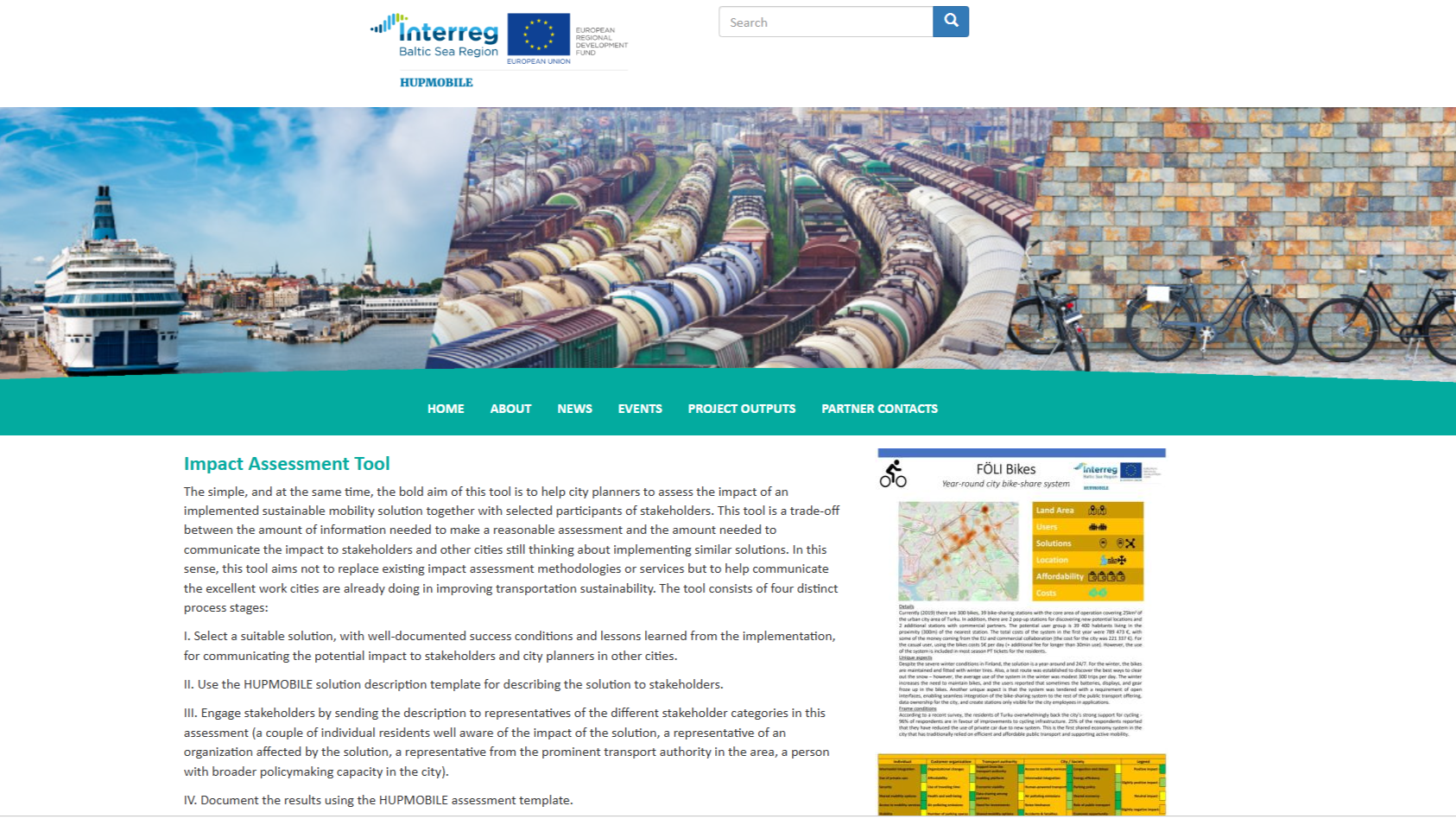
Impact assesment tool
The tool is to help city planners assess the impact of an implemented sustainable mobility solution together with selected participants of stakeholders.
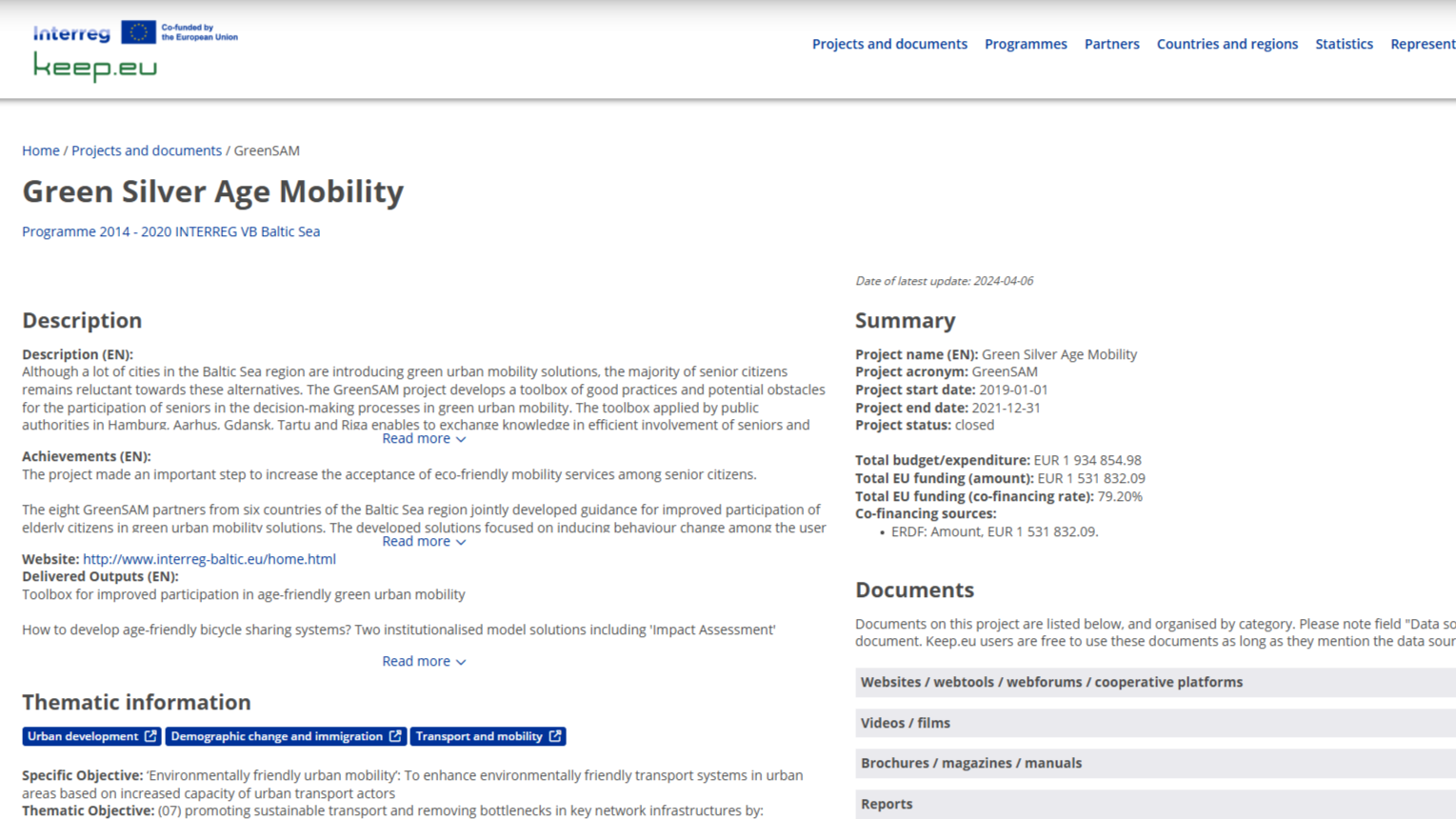
Green Silver Age Mobility project materials
Materials of the project “Green Silver Age Mobility”.
Socio-economic and residential differences in urban modality styles based on a long-term smartphone experiment
The article studies how socio-economic characteristics and neighbourhood context shape residents’ dominant travel modes and multimodal behaviour in Tallinn, using 14 months of smartphone tracking data.
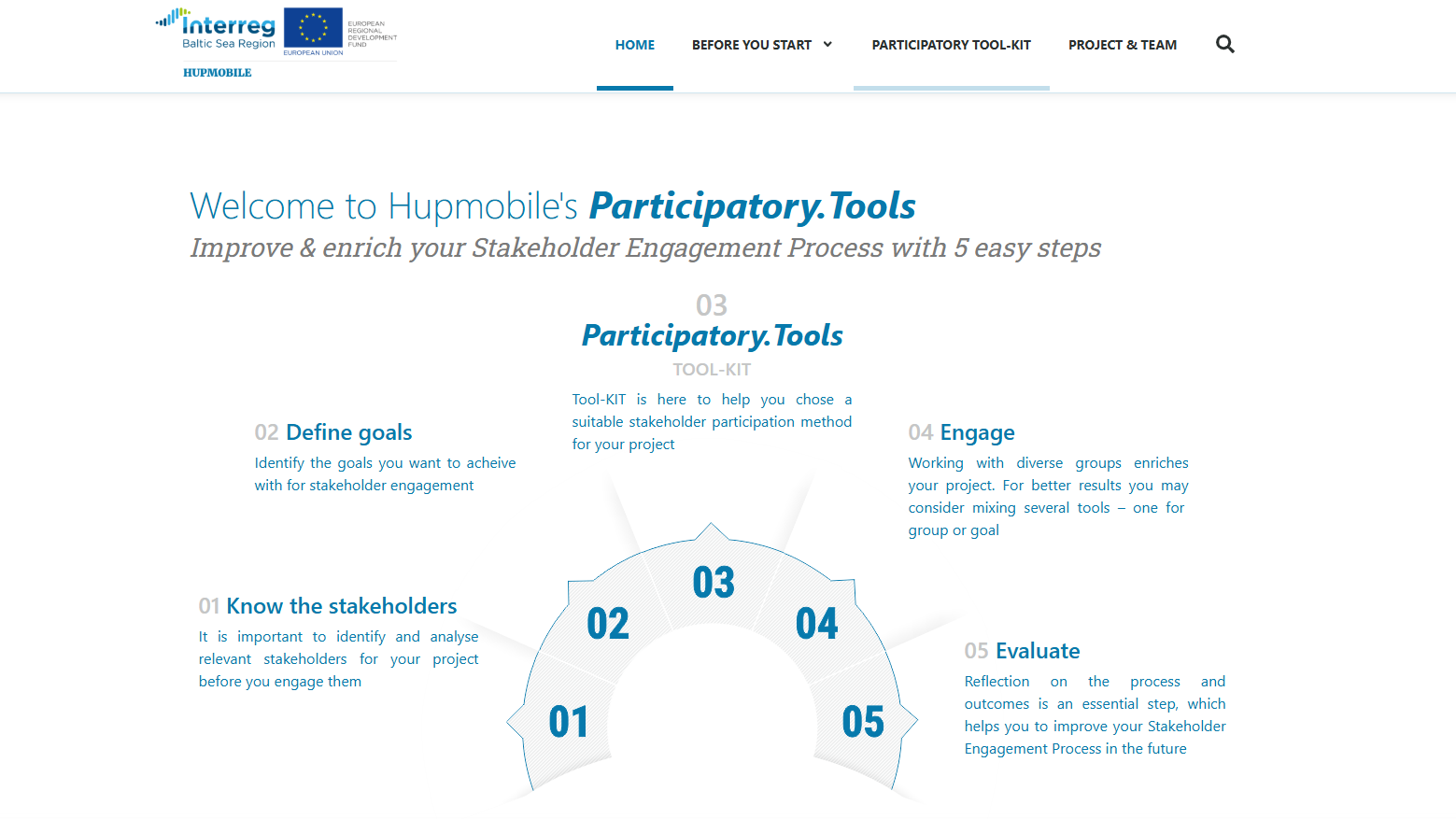
Participatory.Tools
The Participatory toolkit contains a library of different methods for participatory and co-creation activities with citizens and stakeholders, as well support for selecting the most suitable methods.
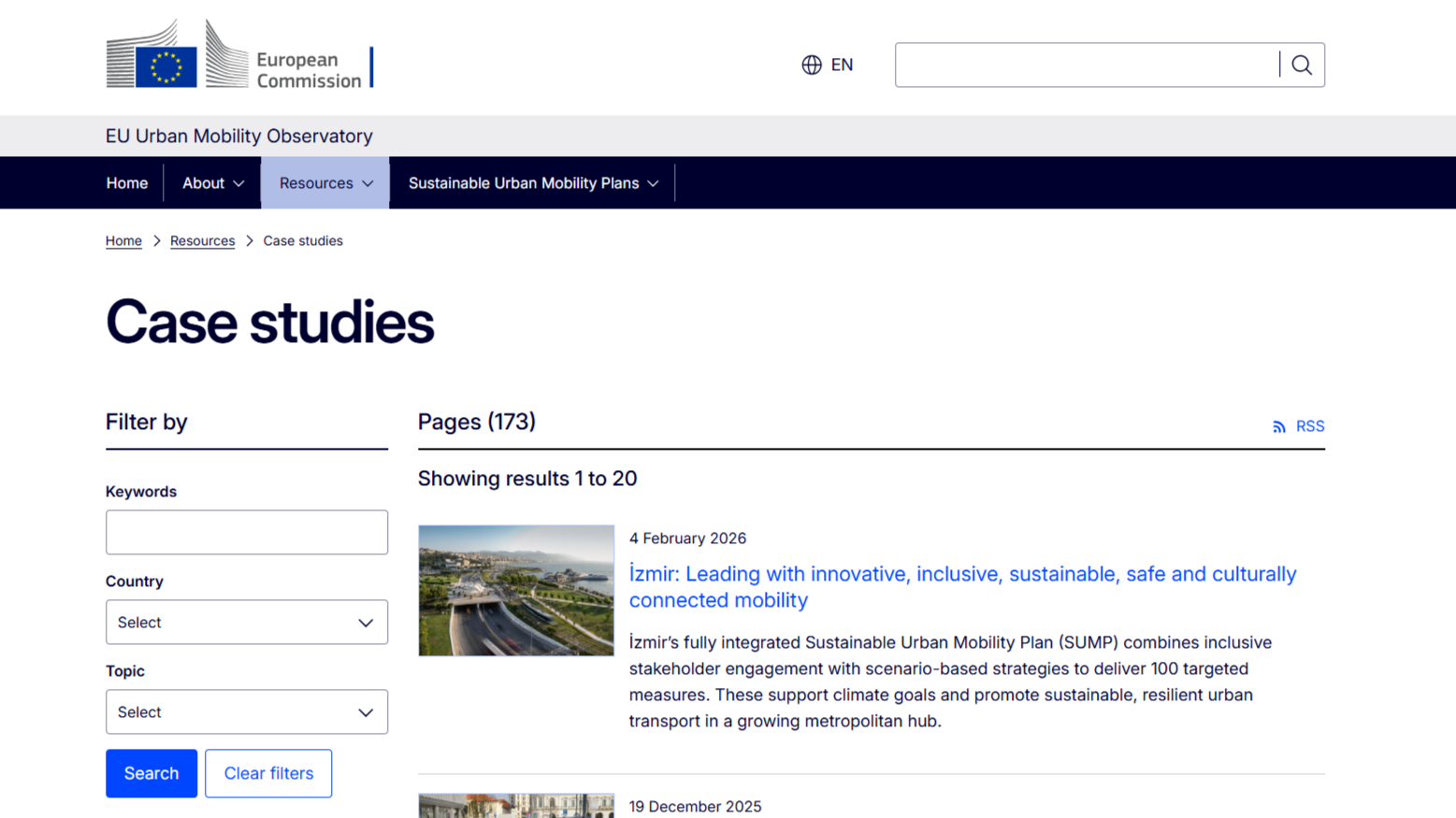
EU Urban Mobility Observatory Case Studies
The library includes numerous case studies and good practices on a variety of topics – from SUMP development to measure planning to implementation.
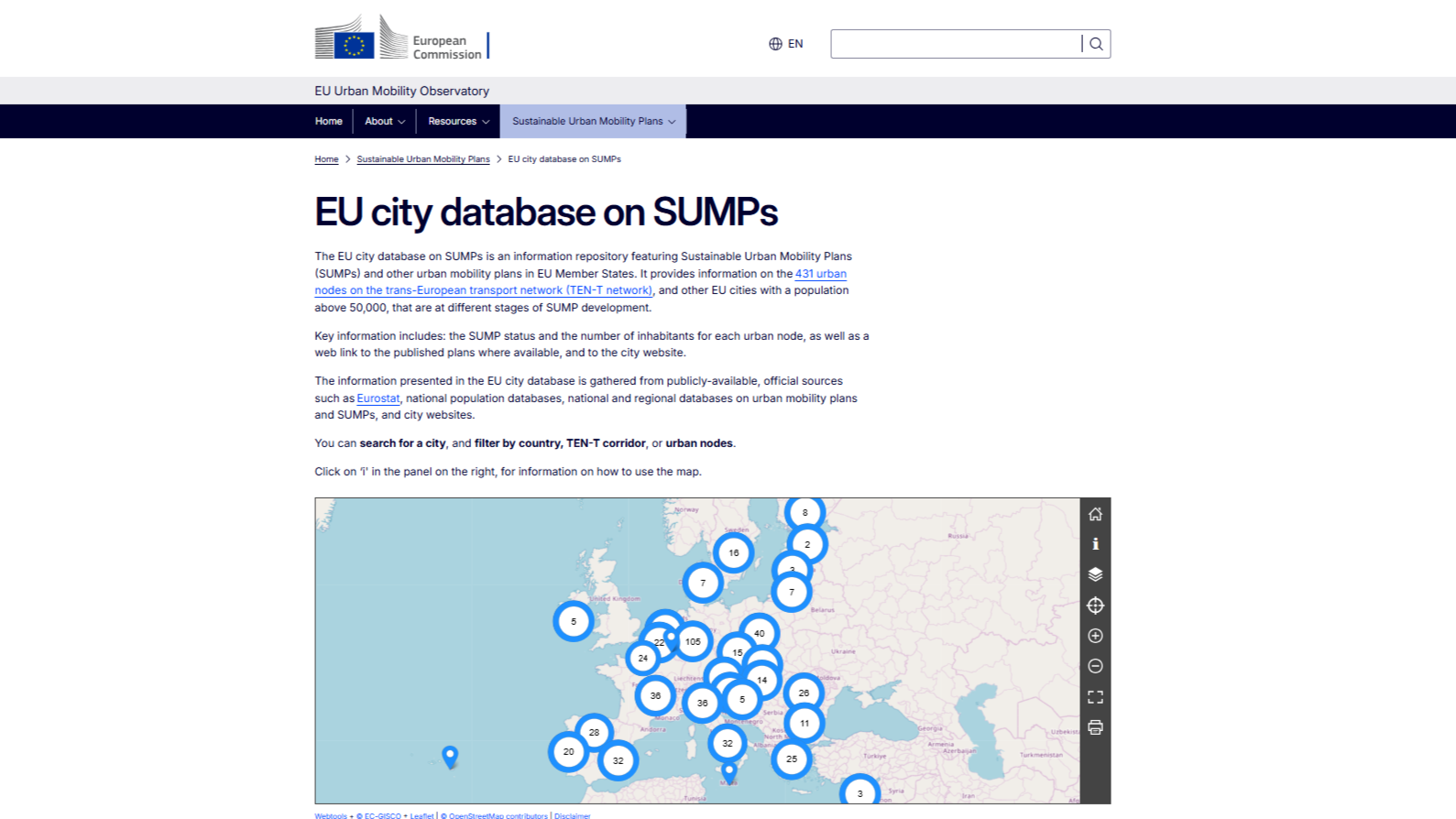
EU city database on SUMPs
The EU city database on SUMPs is an information repository featuring Sustainable Urban Mobility Plans (SUMPs) and other urban mobility plans in EU Member States.
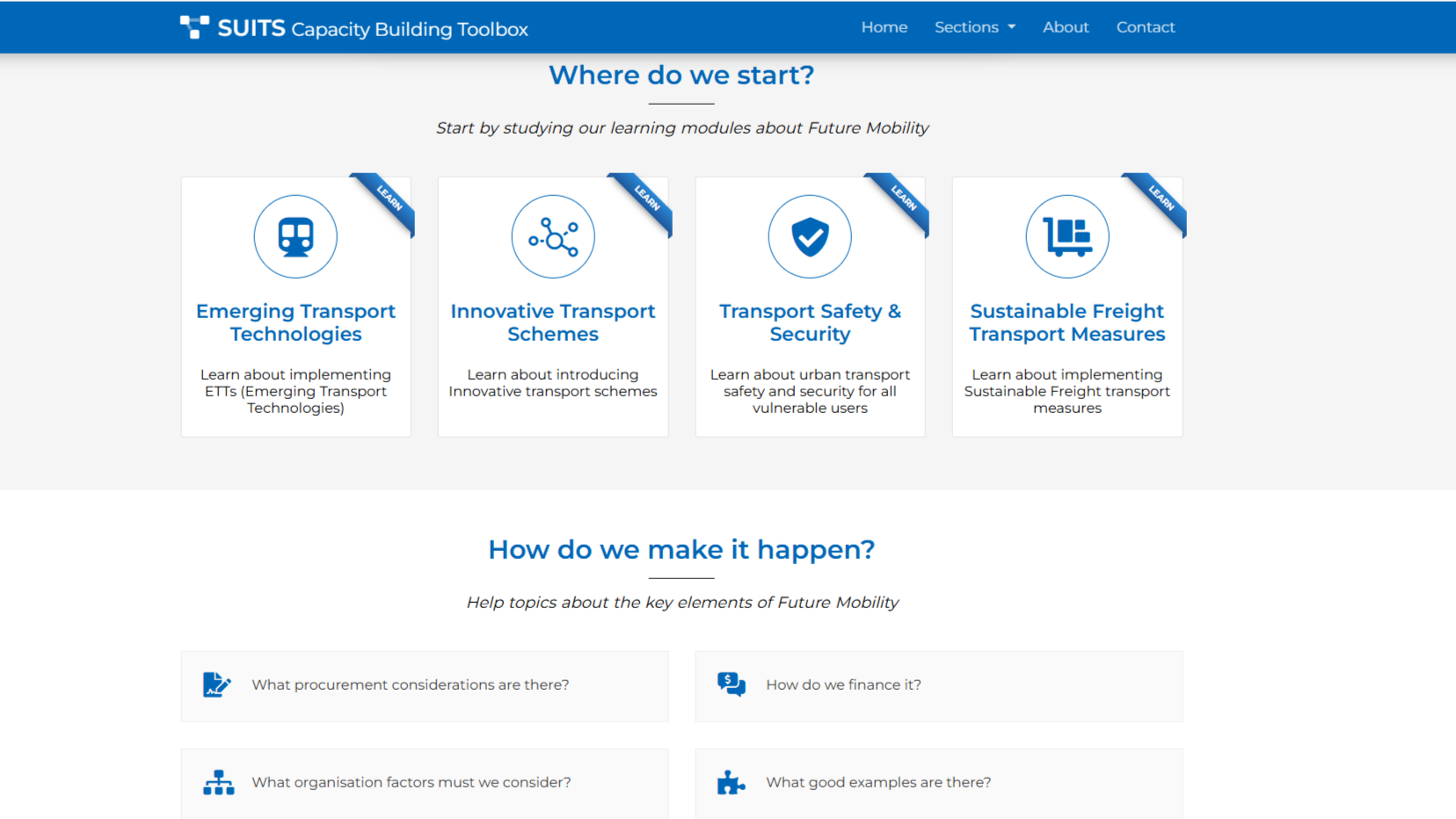
SUITS Capacity Building Toolbox
The Capacity Building Program addresses knowledge gaps and misconceptions related to urban planning measures and the deployment of innovative mobility solutions and technologies.
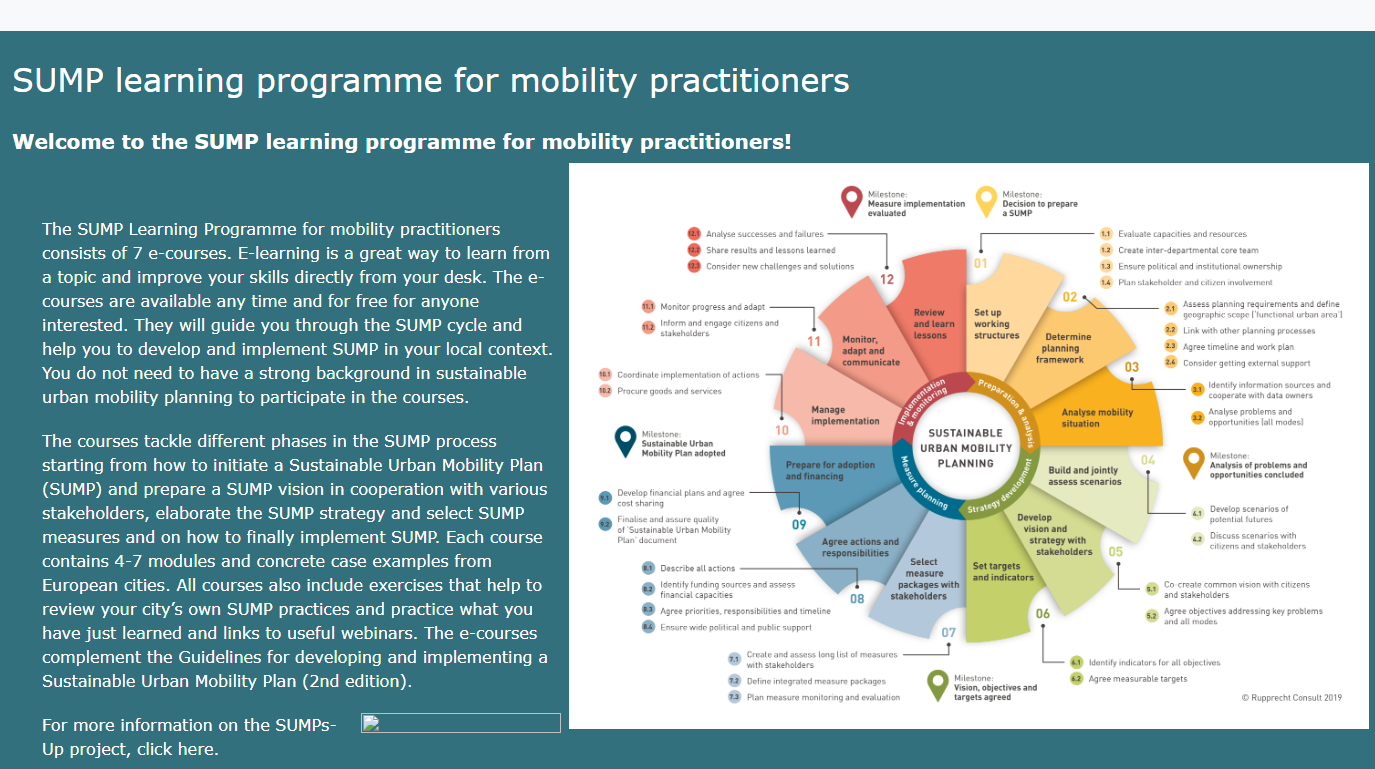
SUMP learning programme for mobility practitioners
The SUMP Learning Programme for mobility practitioners consists of 7 e-courses on different parts of SUMP cycle.
CIVITAS Urban Mobility Tool Inventory
The online database covers over 200 tools and methods, including guidelines, software, manuals, mobile apps, games, and planning approaches.
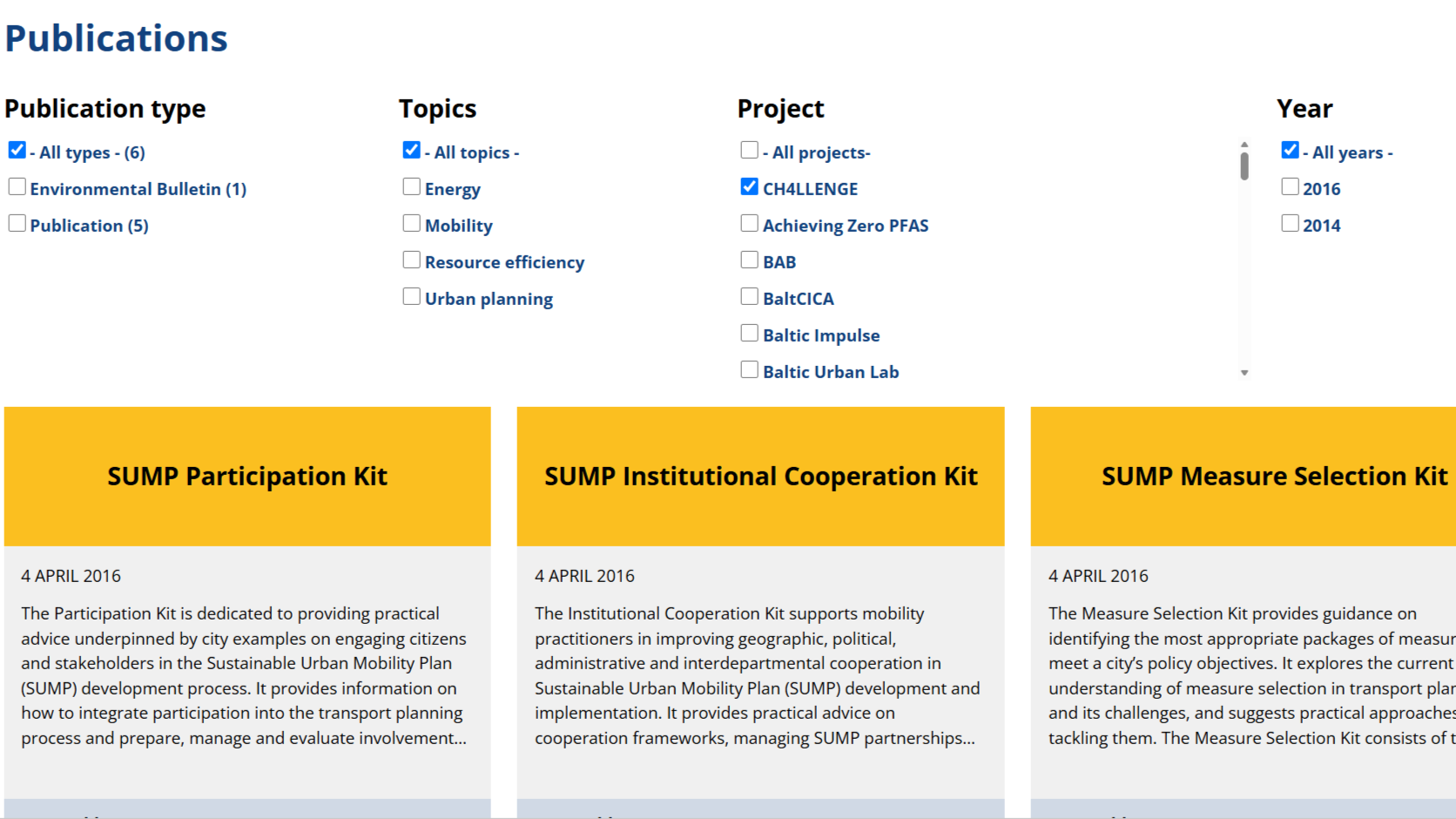
CH4LLENGE SUMP Kits
SUMP Kits support mobility practitioners in SUMP preparation and delivery. Each kit consists of a Quick Facts Brochure, a SUMP Manual and an e-learning course.
ITS Experimental Policy Recommendation Roadmap for BSR Cities
A concept on how to set up innovation-lab-type, more experimental pilots is introduced, building on the previous conceptual and empirical evidence of the mini pilots' concept.
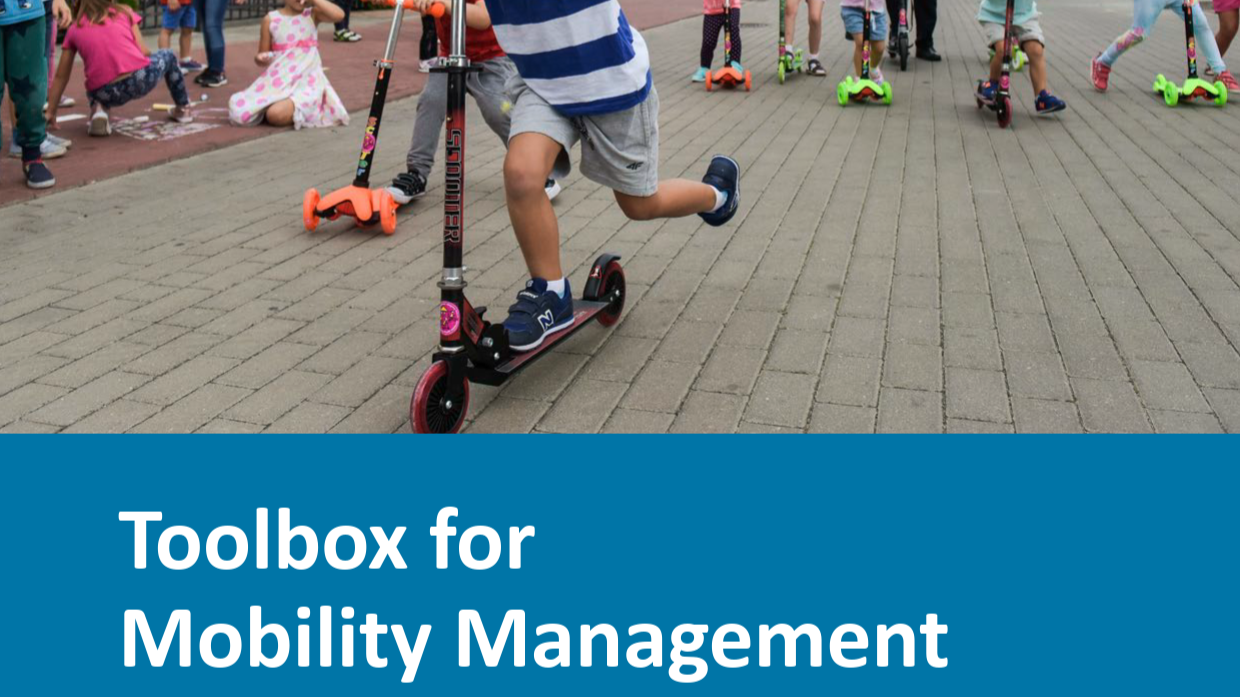
Toolbox for mobility management
The Toolbox provides knowledge on Mobility Management and addresses especially stakeholders at kindergartens, schools, companies and urban development projects.
Justice Toolkit For Streets
The Toolkit is a practical guide diving into the topic of social inclusion and mobility justice, translating them into actionable strategies for creating more inclusive public space and supporting active mobility for all citizens.
Topic Guide: Addressing gender equity and vulnerable groups in SUMPs
The Guide offers support in understanding where gender equity and inclusivity meet transport planning and how to plan gender-responsive stakeholder engagement and meaningful participation.
Best Practices Dutch Cycling
The inspiration guide showcases how the Netherlands successfully plans, designs, and promotes everyday cycling.
Planner’s guide to Sustainable Urban Mobility Planning
This Planner’s guide compiles the experiences of 10 cities from the cities’ multimodal projects.
Previous
Next